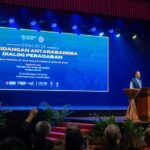
Amid rising global trade tensions and growing uncertainty in the international economic order, the US Tariffs and Trade Wars: Malaysia and ASEAN’s Strategic Response Forum convened policymakers, business leaders, andscholars to examine the implications of escalating trade conflicts and to explore strategic pathways forward for Malaysia and ASEAN. The forum was hosted by the Centre of Regional Strategic Studies (CROSS) and co-organised by the Associated Chinese Chambers of Commerce and Industry of Malaysia (ACCCIM), fostering a timely and substantive dialogue on regional resilience and cooperation.

In his opening remarks, YB Lee Chean Chung underscored the serious challenges posed by the intensifying US–China trade war, noting its far-reaching impact on Malaysia and the wider ASEAN region. As ASEAN Chair in 2025, Malaysia, he emphasised, is well-positioned to help steer a coordinated and principled regional response. YB Lee cautioned against reactive or retaliatory measures, observing that such actions rarely benefit middle powers. Instead, he called for evidence-based diplomacy and long-term strategic thinking, anchored in ASEAN’s collective strength and unity.

He also highlighted domestic vulnerabilities, particularly in sectors such as furniture, textiles, and commodities, which face mounting pressure and potential job losses. To address these risks, he urged targeted assistance, reskilling initiatives, and forward-looking policies to enhance national resilience and future readiness. At the same time, he pointed to emerging opportunities in renewable energy, semiconductors, and automation, driven by shifting global supply chains, stressing the need for agility among Malaysian businesses to capitalise on these developments.

Datuk Ng Yih Ping, President of ACCCIM, shared key findings from a recent business survey, revealing that 55 per cent of respondents expect to be directly affected by the 10 per cent tariff, while 60 per cent expressed pessimism about the economic outlook. Encouragingly, 91 per cent of businesses have already prepared response strategies, including cost-cutting measures and market diversification. Datuk Ng called on the government to introduce tax relief and targeted support for affected sectors, while urging businesses to remain proactive and adaptive. He also cautioned that the current tariff delay is temporary, underscoring the importance of strengthening regional cooperation, expanding market access through RCEP, and resolving trade disputes through dialogue rather than confrontation.


Adding a broader geopolitical perspective, distinguished economist Datuk Prof. Woo Wing Thye highlighted the growing risk of Middle Powers becoming collateral damage amid intensifying rivalry between global superpowers. He proposed the establishment of the United Buffer States (UBS)—a neutral geopolitical platform enabling Middle Powers to maintain balanced trade and diplomatic relations with all major powers. Prof. Woo further introduced the concept of an Atlantic-Pacific SDG Partnership (APSP), anchored on three pillars: a Free Trade Area led initially by ASEAN, Japan, and Korea through the convergence of RCEP, CPTPP, and IPEF; a Nonpartisan Peace Caucus within the United Nations to facilitate mediation between major powers; and an SDG-driven Development Agency to support sustainable development, biodiversity protection, and equitable growth in less-developed economies.


While acknowledging challenges—particularly the historical reluctance of the United States towards multilateralism—Prof. Woo noted that ASEAN’s strong growth trajectory, projected to rival the combined GDP of the EU and the UK by 2045, underscores the urgency of proactive cooperation among Middle Powers. He observed that only Malaysia, Brunei, Singapore, and Vietnam currently participate in RCEP, CPTPP, and IPEF simultaneously, reflecting the delicate balance between economic interest and diplomatic independence. By acting collectively as neutral intermediaries, Middle Powers, he argued, can help reshape global governance, promote sustainable development, and contribute meaningfully to easing US–China tensions in pursuit of long-term global stability and peace.